
I'm Not the Pessimist in the Room
For about a year I've been writing about this territory and people have been politely scrolling past. This time, something had shifted. I wasn't getting dismissals. I was getting people sharing their own versions of the same unease - different industries, different roles, different stages of alarm, but all pointing at the same thing: that the institutions telling us to move fast are not being straight about what fast actually costs, and who bears that cost.
What Goldman Sachs Didn't Say - And Why That Matters
When Rishi Sunak mentioned the K-shaped economy - the risk that AI splits our economy into two diverging tracks - he framed it as large businesses pulling away from small ones. A real concern, and one the 10KSB programme is directly positioned to address. But nobody asked the harder version of the same question: what happens when these 300 businesses leverage AI to hoover up market share from competitors that can't adapt, and the workers displaced in that process - people who couldn't reskill fast enough - are the same people who buy from them? Multiply that dynamic across the country, and across the wider world, and the problem becomes easy to see. Yesterday, adoption was framed in isolation. Nobody framed it in societal terms.
Is My Job Safe? The Three Questions You Actually Need to Answer
Business leaders across professional services, knowledge work, and most of the sectors where mid-level workers have felt secure for two decades are going to be forced to change quickly - whether they planned to or not. The competitive landscape, the labour economics, the technology capability, the economic pressures are all moving at the same time. When that happens, the dynamic I lived through in manufacturing plays out at scale, across an entire economy.
For Francesca - and for most people doing knowledge work right now - the disruption isn't a possibility. It's a given. The question is whether she's in the right place to navigate it, and whether she has the personal capacity to do so. That's what these three questions are actually asking.
What an Investment Thesis Taught Me About Business Survival
Most business strategy is built on one unspoken assumption: that the world your business operates in tomorrow will be roughly the same as the one it operates in today. That assumption is now wrong. And most leaders haven't caught up with that yet.
There's a version of business planning that looks thorough, covers all the right bases, asks all the right questions - and still gets you into serious trouble because every conclusion it draws is grounded in an economic reality that's already shifting faster than the plan accounts for. I've watched it happen to businesses that looked stable on paper. I've had to go into those businesses afterwards and figure out what to do about it.
What I want to share here is how I came to understand why the standard approach isn't sufficient anymore - and what a more honest version of strategic thinking actually looks like.
Why I'm Running the Bath Half Marathon (And Why I'm Uncomfortable Asking You to Sponsor Me)
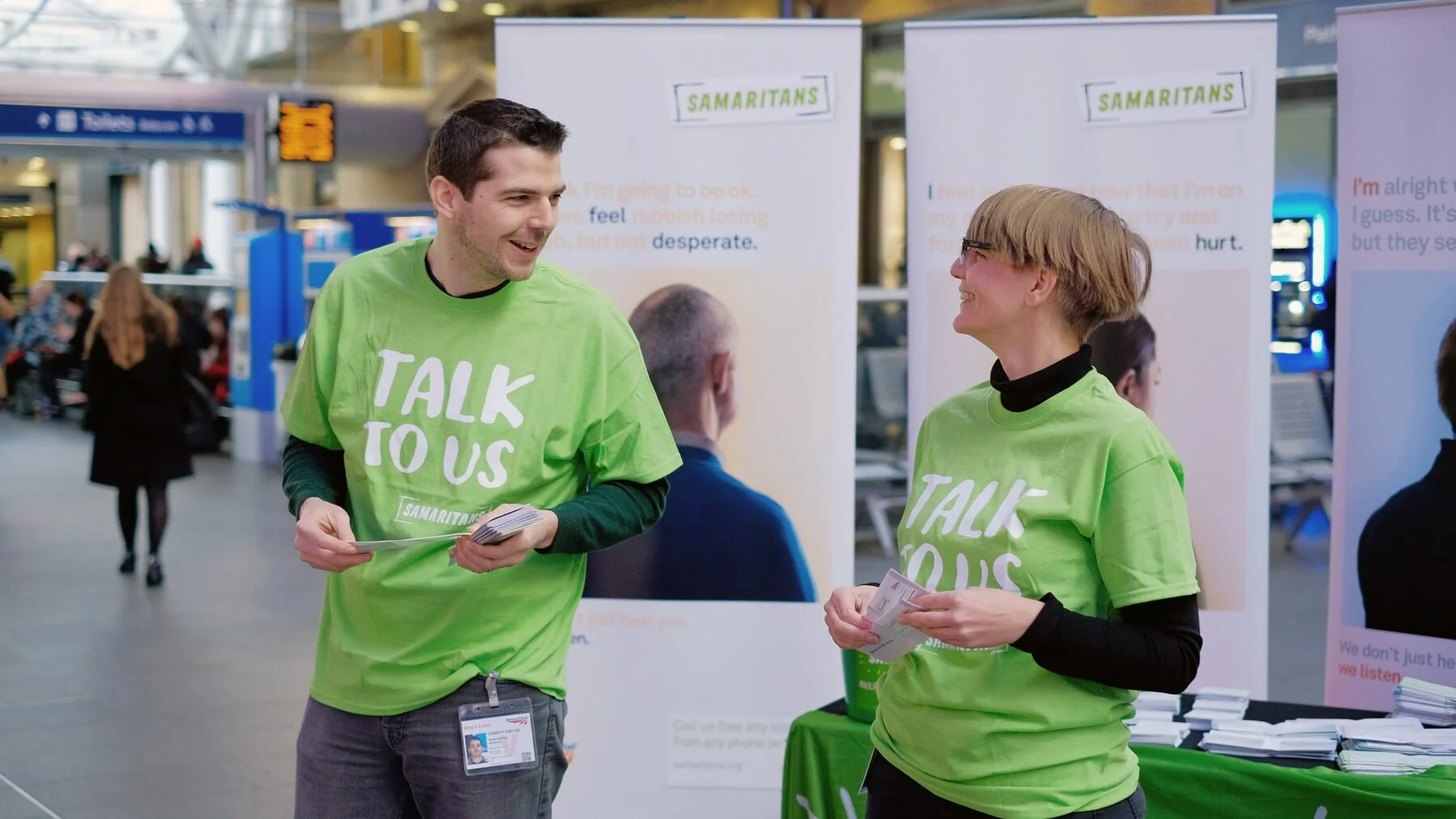
Being a Samaritan has opened up a whole world, both in terms of what I know about society now and what I know about myself, that I didn't have before. For that reason, I am truly indebted to the Samaritans.
So I'm running the Bath Half Marathon on Sunday 15th March 2026, not because it's physically difficult for me, but because I want to give something back to an organisation that gives everything and asks for nothing, because I want to encourage others to talk, to share, to listen and to be listened to, and because if you're reading this and thinking about becoming a Samaritan yourself, I want you to know it will change you in ways you cannot anticipate and it is worth every second.

Walking Into Burning Buildings (#3/3)
Crisis as gift only makes sense in retrospect. While you're in it, it's just crisis. So the work isn't about convincing people crisis is good while they're burning. It's about standing there and telling them: this is awful, and it's real, and you'll get through it, and something else becomes possible on the other side.
Honest acknowledgment that it's as bad as it feels, combined with genuine belief that transformation is possible, without pretending those two things don't contradict each other emotionally.
Most people trying to help can't hold that tension. They either minimise the crisis or catastrophise it. Neither is useful.
Why Crisis Might Be the Best Thing That Ever Happened to You (#2/3)
I told a client last week that crisis is beautiful.
"I thought you'd lost the plot!" he said.
Fair. From inside a burning building, being told the fire is good for you sounds completely insane.
But here's what I've learned from going through multiple crises: the building being on fire might be the best thing that ever happened to you.
Not because crisis is fun. Not because suffering builds character. But because crisis creates conditions nothing else can create.
The SME Leader's Trap (#1/3)
Why can’t business leaders in crisis can't ask for help?
The median net profit for an SME leader in Britain is £13,000 per year. Thirteen thousand pounds for carrying all the personal liability, all the risk, all the stress of keeping other people employed.
And yet 99.8% of UK businesses are SMEs. They employ 60% of the workforce. The entire economy rests on their backs.
We've built these people a trap with no exit. They have to perform constant success while simultaneously guaranteeing they'll face regular crisis. You don't win clients by admitting your cash flow crisis. You don't retain employees by saying you're not sure you can make next month's wages. So you learn to perform success even when you're dying inside, because the alternative is watching everything collapse faster.

January 2026: Stop Reading the Obituaries & Start Writing Your Comeback
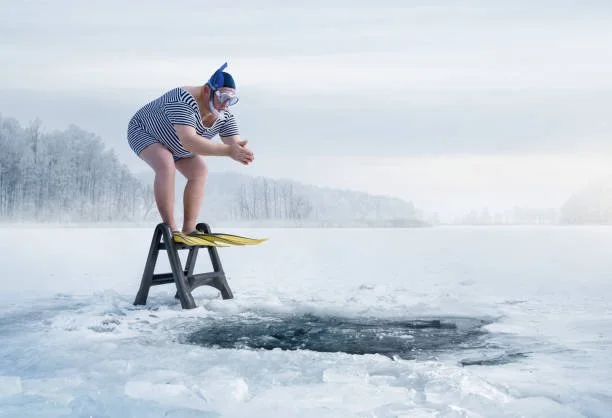
Standing at the edge of freezing water, every instinct screaming at you not to dive in.
That's where you are right now as an SME leader in January 2026.
The headlines are relentless: zombie apocalypse, 350,000 job losses forecast, business confidence at three-year lows, the triple whammy of interest rates, energy costs, and minimum wage increases supposedly finishing off UK businesses.
Your competitors are frozen at that edge, waiting for the water to warm up.
But here's the truth:
The first thirty seconds will be agony. Your body will scream at you to get out.
But if you stay in, grit your teeth, and breathe through it - the shock becomes clarity. The pain becomes power. The fear becomes competitive advantage.
You're an SME leader carrying responsibility through the hardest economic environment in a generation. That's not a burden - that's a badge of honour.
Whilst zombie firms collapse around you (businesses that survived on cheap credit and crossed fingers), you're battle-tested, still standing, and staring at the biggest competitive opportunity in twenty years.
Crisis brings gifts that prosperity never delivers: opportunity, clarity, humility, and authenticity.
2026 is the year that discipline beats drift. That strategic investment beats paralysis. That rapid adaptation beats waiting for conditions to improve.
Your competitors are frozen at the edge. And you're diving in. LFG!
Stop reading the obituaries and start writing your comeback.
In Defence of Small: Why We Need to Stop Apologising for Not Being Corporate Giants
For 12 years I ran a manufacturing business in the West Country. And for most of those 12 years, I was embarrassed to be called an SME.
Small felt weak. Medium felt middling. Unless you were scaling towards empire-building, you weren't playing the game properly.
I fell for the lie completely. Even after exiting, I found myself talking to one of the biggest US banks about working for them. Because part of me still believed that's where real success lived.
SEASONAL SLOWDOWN PREPARATION
It's December 9th. You know you should have done something about this weeks ago. You haven't.
That familiar tightness is starting. Revenue is softening. A few customers are already paying slower. You're watching the bank balance more closely than usual. And somewhere in the back of your mind, you're wondering if this December will be like last December.
It will be. Unless you do something different in the next two weeks.
The Crisis Beneath the Crisis
You know you're performing. The work version of yourself that speaks in careful, corporate language, stripped of anything that might be considered unprofessional or too revealing. The version that holds back in meetings, maintains appropriate distance, never lets anyone see what's actually going on beneath the surface. You tell yourself this is just how professional life works, that everyone does it, that the compromises are temporary and the rewards will come eventually. Meanwhile you're medicating the disquiet with Netflix binges, weekend drinking, scrolling through social media at 2am, buying things you don't need to feel briefly like you're getting somewhere. You confuse these moments of escape with happiness, distraction with contentment, and the whole time you're being dragged further out of alignment with who you actually are until the distance between your core self and the person you're pretending to be becomes unsustainable.
When Ego Stops Being Your Friend
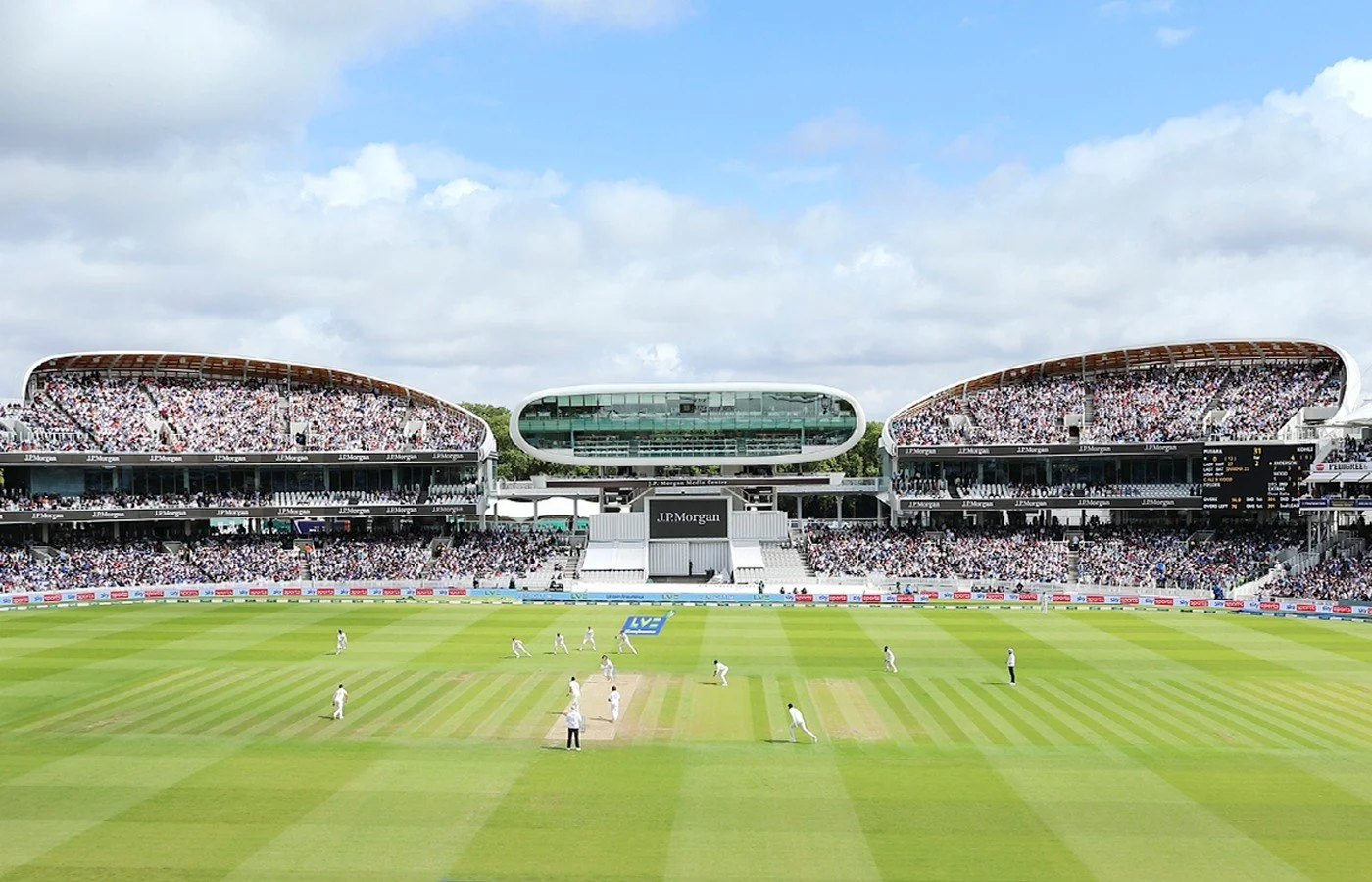
Leaders need strong egos. Without ego, nothing gets done.
I saw this argument on LinkedIn last week and it's right about growth and catastrophically wrong about crisis.
The terrifying bit is that you don't get to choose which battlefield you're on when the market shifts underneath you. The leadership operating system that drives extraordinary results during growth becomes actively dangerous during crisis. And if you've built your entire identity on ego-driven motivation, you can't switch operating systems when the environment changes.
The Pattern I Couldn't See: Why Crisis Is Always Personal
For months, I have been introducing myself differently depending on who I was talking to.
To business advisors and leaders: "I do business turnaround - cultural transformation and operational restructuring for £2-20m companies."
To people asking about Harshlight: "I'm working on AI's social impact - specifically the workforce displacement crisis nobody's preparing for."
To friends asking about my volunteer training: "I'm learning how to provide emotional support to people in crisis."
Three completely different things. Except it's just dawned on me that they weren't. They aren't.
Sliding Doors
Standing in an Uninspiring Conference Room, I Realised I Might Be Wrong About Everything
Community isn't dying. I just didn't know what it looks like.
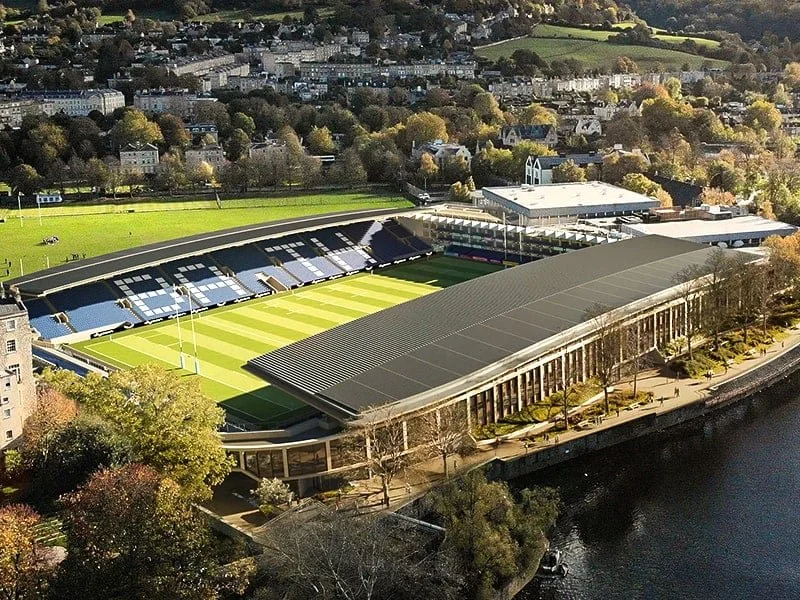
I found it yesterday in an uninspiring conference room in Bath, surrounded by accountants drinking terrible coffee.
When Allison Herbert, CEO of Bath BID, talked about Bath winning Britain in Bloom, her face lit up with genuine delight that people had come together to do something that mattered. Not corporate pride. Actual joy.
My friend Kathryn leaned over and said "I love all the badass women in here that run this city." She wasn't wrong.
For months I've been operating under this assumption that community and genuine human connection are dying, that places like Bath are just beautiful museums whilst the real action happens elsewhere in louder, shinier cities. I'd been looking for dynamism in all the wrong places.
The Power of Being Heard (And Why It Matters in Crisis) (Part 3 of 3)

Even When We Know the Truth, Emotion Paralyses Us (Part 2 of 3)
Last week I wrote about the rationality myth - how we lie to ourselves and refuse to confront brutal truths even when they're staring us in the face.
But there's a second barrier that's even more insidious: even when we finally accept reality, emotion dominates us and stops us acting.
I discovered this in the most unexpected way.
We Think We're Rational. We're Not. (Part 1 of 3)
We think of ourselves as rational beings.
We assess situations objectively, weigh the facts, and make logical decisions based on truth. That's the story we tell ourselves, anyway.
But I've learnt something from 12 years of living through business crisis, from coaching people through job transitions, and from my Samaritans training: we're terrible at this. Almost universally, appallingly bad at it.
Not because we're stupid. But because we lie to ourselves..

The Soft Skills That Accelerated Tom Canning to Professional Racing Driver Status
It's March 2018, and we're trackside at Oulton Park. Tom Canning is about to become the youngest driver in British GT history. At 16 years and 35 days old, he's preparing to strap into a 400 brake horsepower monster.
Nerves are high. The field is stacked with McLaren, Ferrari, and Aston Martin works drivers. Tom has one season of Junior Ginetta car racing behind him. In his eyes, these are men. He is still just a boy.