
The Blunt Force Instrument
Every business leader I've spoken to, tech founders possibly aside, gives the same answer the moment the conversation turns to changing how they actually make money. They default to what they know. What they've always done. Changing the shape of the business doesn't feel like a commercial decision, it feels like an amputation, and no rational framework, no business case, no clever deck ever talked anyone out of protecting a limb.
That would matter less if the ground weren't moving. The cost of automation is falling faster than any transformative technology in recorded history, faster than compute, faster than DNA sequencing, faster than electrification itself. Every quarter spent protecting the limb is a quarter the gap widens.
Is Your Profit A Grind?
In my last article I wrote about founders and owner-managers being stuck against the same four things: Time, Execution, Mindset and Structure. A leadership programme in 2018 helped me to be better at the first three but this programme was never going to tell me I was polishing a turd. They were going to give me the tools, stand back and see if I figured it out myself.
The Four Constraints on SME Leaders
There's a particular kind of exhaustion that comes from running a business that depends entirely on you standing in the middle of it, and it doesn't announce itself as exhaustion, it just feels like Tuesday. Twelve hours a day, five or six days a week, and the honest answer to what all those hours bought you is: standing still. Not falling over. Standing still. When someone paying attention to my world mentioned a leadership programme, four months, compressed, twenty hours a week on top of everything else, I laughed, because I couldn't find twenty hours to save my life. The answer I got back has stuck with me since: if you can't find the twenty hours, you're exactly the person who needs to.
The Manufacturers Who Will Still Be Standing in 2036
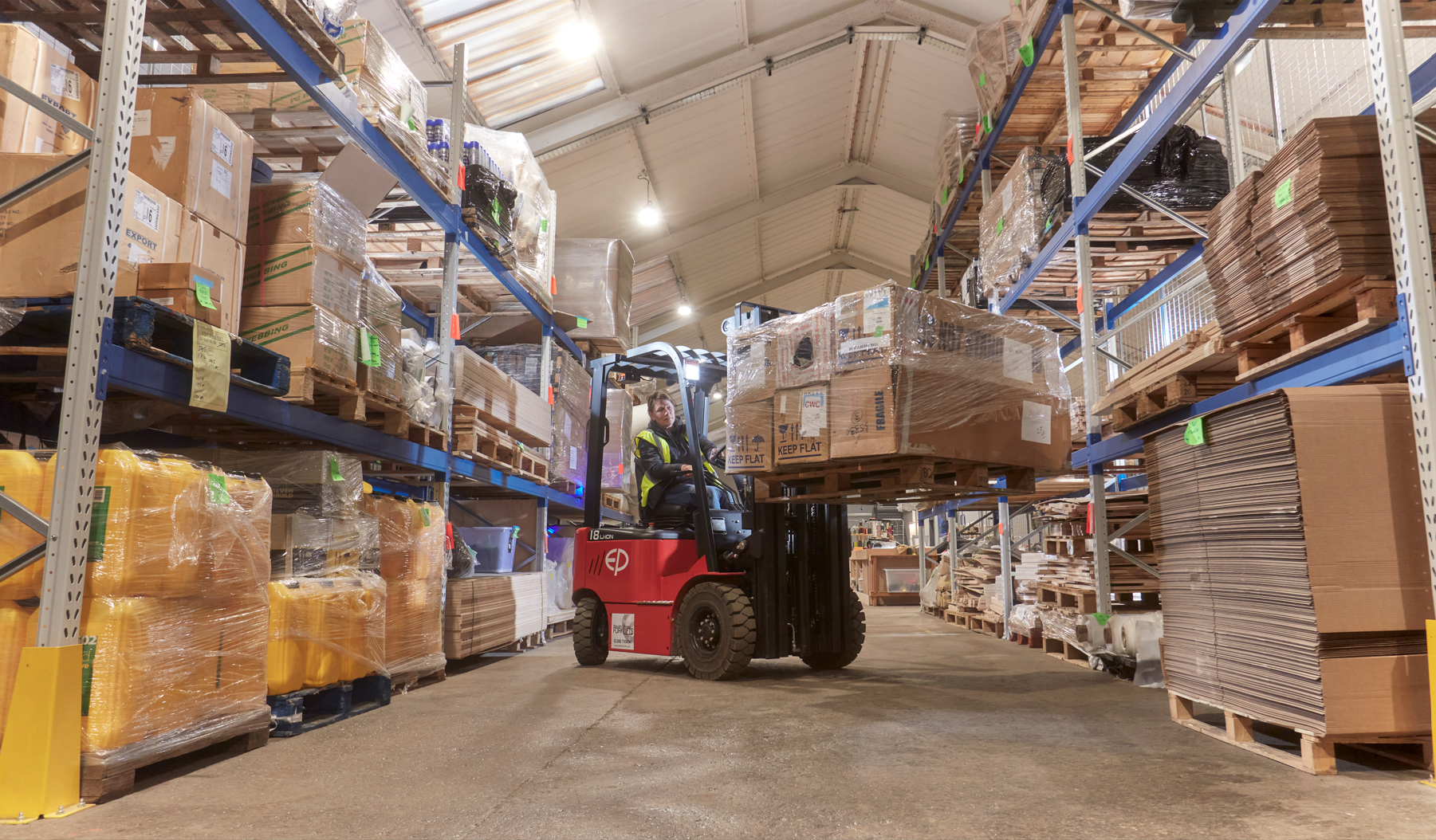
Manufacturing can be dirty work. And I've lived it.
Unless you sit in aerospace, semiconductor and electronics, automotive, or life sciences and medtech, the disciplines that run a shop floor haven't changed much in decades. The businesses built on top of them haven't either.
Set that against how fast the rest of the economy is moving. Finance has been rebuilt twice over in the last fifteen years. Technology rebuilds itself every eighteen months by design. AI is compressing that cycle further still.
Walk onto most manufacturing shop floors and you're looking at a business model that predates the internet, running inside an economy that no longer resembles the one it was built for. Every time I switch between working with developers and working with manufacturing teams I am struck by the contrast.

Grinding it out is not a strategy
I think most business leaders I meet are running their business the way England have played this tournament. Industrious. Honest. Everyone pulling in the same direction under real pressure, and it just about holds. That's not a criticism, because grafting through adversity is a genuine skill and a lot of businesses wouldn't survive without it. But grafting is not the same thing as having built the thing that makes winning look easy, and almost nobody teaches leaders the difference , because it's an uncomfortable thing to hear when you've spent years being proud of the effort.
Two disruptions you aren't pricing
You are being ranked right now, by the people who work for you, on one question: can you see what is coming and move the business in time. Most leaders are answering it badly, and the reason is that they are answering a different question instead.
The question absorbing them is which tool. Which feature Monday.com pushed out this week, which add-on HubSpot is selling, which part of the sales process Salesforce says it can now automate, which workflow a consultant has offered to map, which integration, which bespoke build, which clever prompt someone swears will change everything. The productivity is real and the pressure to chase it is relentless and it moves this quarter and you can show it to your board, which is precisely why it eats all the available attention. The question that decides whether the business is still standing in five years moves none of those things and is harder to look at, so almost nobody looks.
Look at it. There are two ways the world moves under a business in this era, and your AI adoption addresses neither.
Lifestyle business? The polite way of saying you don't matter.
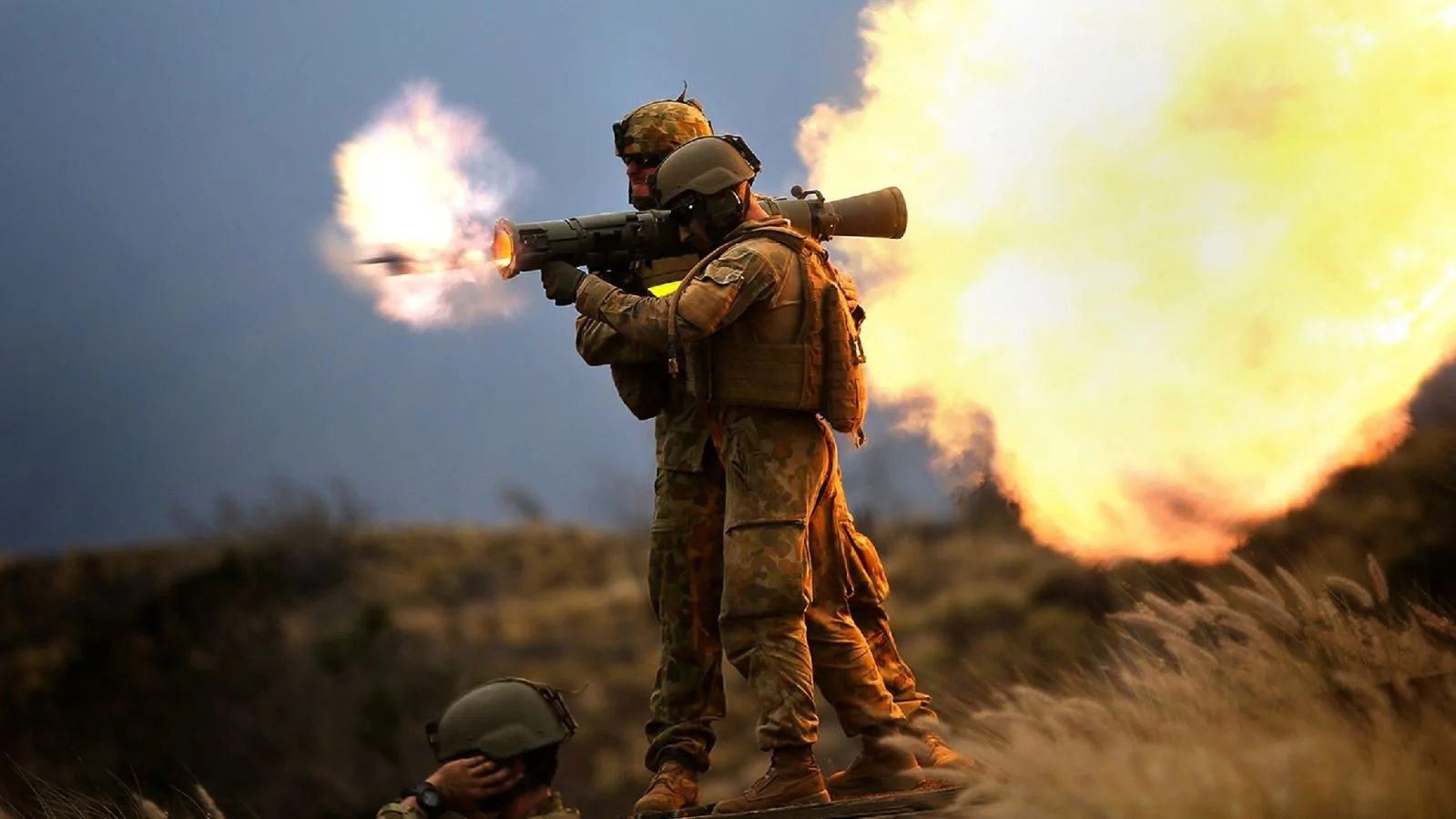
The Bazooka is what a Grafter can become. Small footprint, disproportionate impact. It carries all the DNA of a Lifestyle Business - the clear value, the genuine pain point solved, the pricing that reflects real differentiation - and adds the commercial architecture that means it can deliver the thing without the founder being the thing. The founder goes on holiday and the revenue doesn't drop. The business turns away work that doesn't fit its model without the panic of a business that needs every client it can get. Its leadership is aligned in terms of values and motivation with what the business actually does, and that alignment is structural, not personal: it holds when the founder is not in the room. The Lifestyle Business can't be sold because it is the founder. The Bazooka can be sold because it is bigger than them.

The Camel in the Room
Everyone talks about skills retraining. Reskilling programmes, boot camps, online courses. That's necessary. But it treats the problem as purely technical: acquire the new capability, slot into the new role. It ignores what happens when a newly capable person walks into a room that hasn't decided to believe in them yet.
The hard part is this: being capable of doing new work is not the same as being trusted to do it. And trust doesn't transfer. It gets rebuilt from scratch, in every new room, on every new room's timeline. No reskilling programme touches that. No policy paper accounts for it.
People are going to be pushed out of entire career paths - not roles, careers - faster than the professional worlds they move into can absorb them. The skills gap will close. The acceptance gap won't close anywhere near as fast. That is where the damage will accumulate, quietly, in people who have done everything right and still can't get a room to believe them.
AI is moving faster than anyone can track. So how do you keep up?
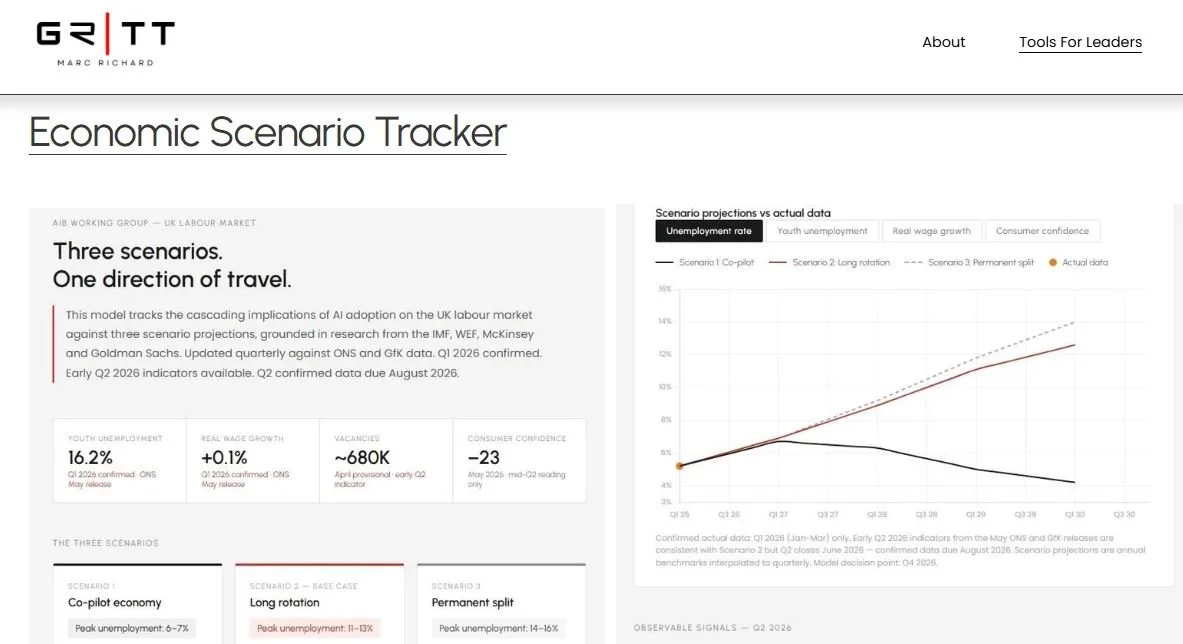
Most business leaders are not prepared for what is coming. Not because they are not intelligent or not working hard, but because the cascading implications of AI adoption are genuinely difficult to see clearly when you are inside a business trying to run it day to day. The technology is moving fast. The economic signals are mixed and often contradictory. And the people whose job it is to advise business leaders - accountants, lawyers, banks, consultants - are largely working from the same incomplete picture.
Most business leaders are looking in the wrong direction
Together with a group of investors, advisers, and operators through Angel Investors Bristol, I've been leading a working group to build a rigorous investment and strategic thesis around what the AI era actually means - not for tech businesses, but for every business and the leaders running them. The result is a document we're calling Investing Through Disruption.
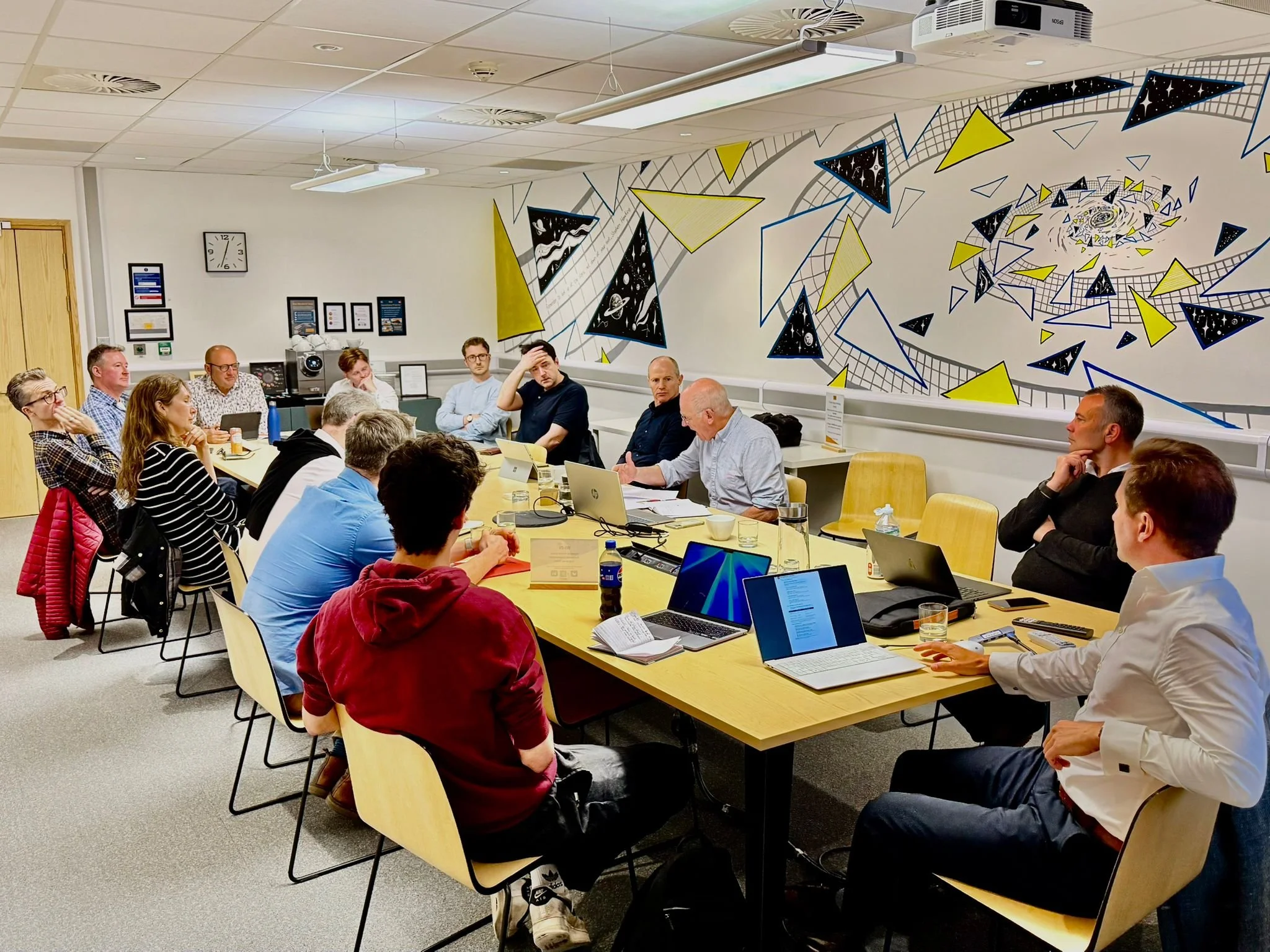
Looking Down The Table
The thing I keep coming back to is this: almost everything we produced applies as much to a manufacturer or a professional services firm as it does to a technology startup. AI disruption is environmental, not sectoral. The questions that matter - who is your end customer and what happens to their spending if the economy compresses? Does your business model rely on friction that AI is dissolving? Is your leadership team capable of evolving at the pace the environment will demand? - apply to every business walking through a door right now, not just the ones with AI in the deck.

I'm Not the Pessimist in the Room
For about a year I've been writing about this territory and people have been politely scrolling past. This time, something had shifted. I wasn't getting dismissals. I was getting people sharing their own versions of the same unease - different industries, different roles, different stages of alarm, but all pointing at the same thing: that the institutions telling us to move fast are not being straight about what fast actually costs, and who bears that cost.
What Goldman Sachs Didn't Say - And Why That Matters
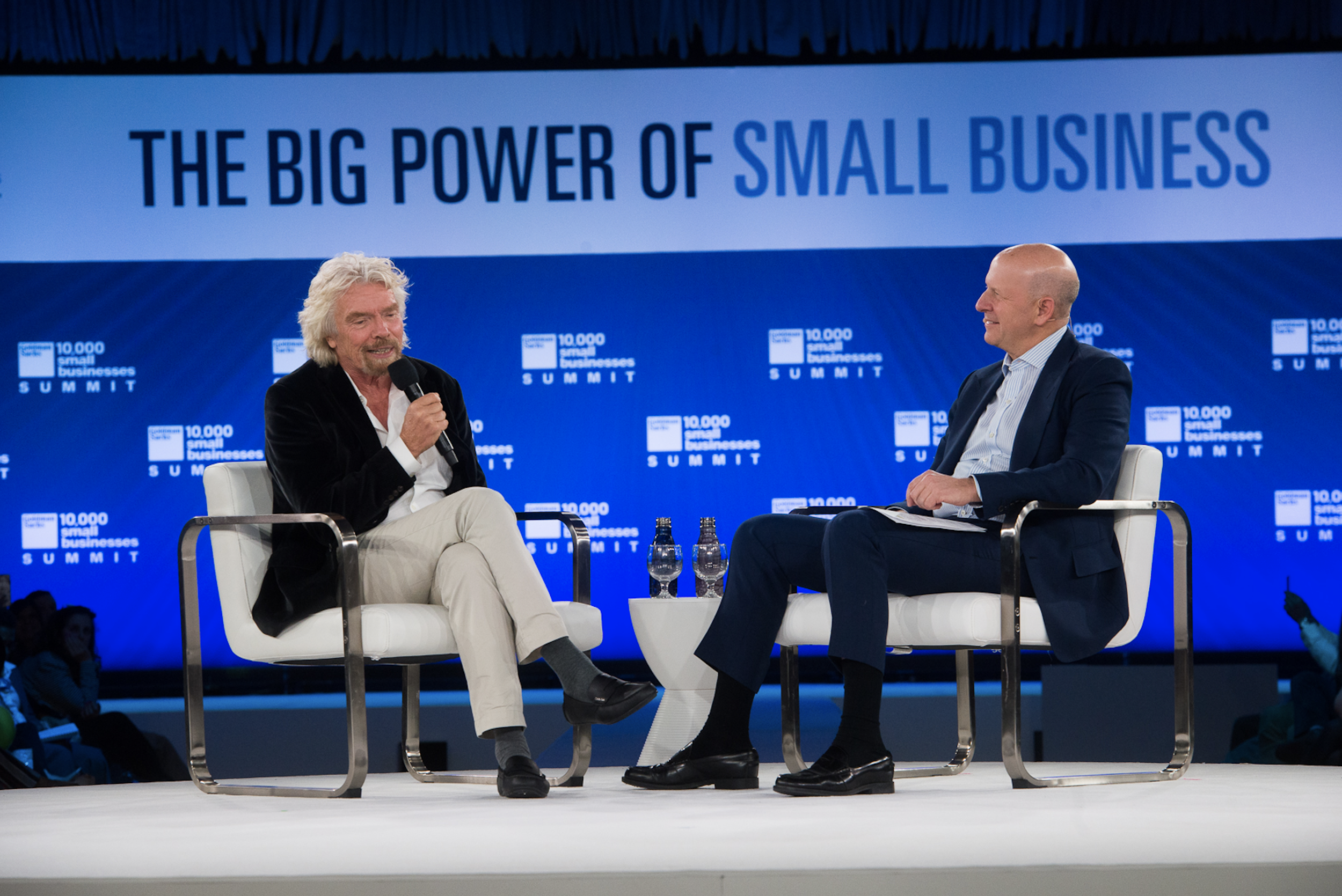
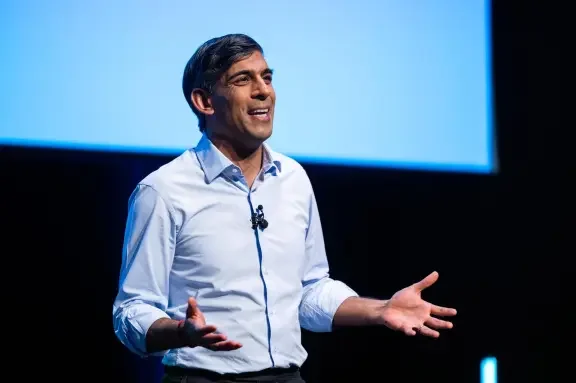
When Rishi Sunak mentioned the K-shaped economy - the risk that AI splits our economy into two diverging tracks - he framed it as large businesses pulling away from small ones. A real concern, and one the 10KSB programme is directly positioned to address. But nobody asked the harder version of the same question: what happens when these 300 businesses leverage AI to hoover up market share from competitors that can't adapt, and the workers displaced in that process - people who couldn't reskill fast enough - are the same people who buy from them? Multiply that dynamic across the country, and across the wider world, and the problem becomes easy to see. Yesterday, adoption was framed in isolation. Nobody framed it in societal terms.
Is My Job Safe? The Three Questions You Actually Need to Answer
Business leaders across professional services, knowledge work, and most of the sectors where mid-level workers have felt secure for two decades are going to be forced to change quickly - whether they planned to or not. The competitive landscape, the labour economics, the technology capability, the economic pressures are all moving at the same time. When that happens, the dynamic I lived through in manufacturing plays out at scale, across an entire economy.
For Francesca - and for most people doing knowledge work right now - the disruption isn't a possibility. It's a given. The question is whether she's in the right place to navigate it, and whether she has the personal capacity to do so. That's what these three questions are actually asking.
What an Investment Thesis Taught Me About Business Survival
Most business strategy is built on one unspoken assumption: that the world your business operates in tomorrow will be roughly the same as the one it operates in today. That assumption is now wrong. And most leaders haven't caught up with that yet.
There's a version of business planning that looks thorough, covers all the right bases, asks all the right questions - and still gets you into serious trouble because every conclusion it draws is grounded in an economic reality that's already shifting faster than the plan accounts for. I've watched it happen to businesses that looked stable on paper. I've had to go into those businesses afterwards and figure out what to do about it.
What I want to share here is how I came to understand why the standard approach isn't sufficient anymore - and what a more honest version of strategic thinking actually looks like.
Why I'm Running the Bath Half Marathon (And Why I'm Uncomfortable Asking You to Sponsor Me)
Being a Samaritan has opened up a whole world, both in terms of what I know about society now and what I know about myself, that I didn't have before. For that reason, I am truly indebted to the Samaritans.
So I'm running the Bath Half Marathon on Sunday 15th March 2026, not because it's physically difficult for me, but because I want to give something back to an organisation that gives everything and asks for nothing, because I want to encourage others to talk, to share, to listen and to be listened to, and because if you're reading this and thinking about becoming a Samaritan yourself, I want you to know it will change you in ways you cannot anticipate and it is worth every second.

Walking Into Burning Buildings (#3/3)
Crisis as gift only makes sense in retrospect. While you're in it, it's just crisis. So the work isn't about convincing people crisis is good while they're burning. It's about standing there and telling them: this is awful, and it's real, and you'll get through it, and something else becomes possible on the other side.
Honest acknowledgment that it's as bad as it feels, combined with genuine belief that transformation is possible, without pretending those two things don't contradict each other emotionally.
Most people trying to help can't hold that tension. They either minimise the crisis or catastrophise it. Neither is useful.
Why Crisis Might Be the Best Thing That Ever Happened to You (#2/3)
I told a client last week that crisis is beautiful.
"I thought you'd lost the plot!" he said.
Fair. From inside a burning building, being told the fire is good for you sounds completely insane.
But here's what I've learned from going through multiple crises: the building being on fire might be the best thing that ever happened to you.
Not because crisis is fun. Not because suffering builds character. But because crisis creates conditions nothing else can create.

The SME Leader's Trap (#1/3)
Why can’t business leaders in crisis can't ask for help?
The median net profit for an SME leader in Britain is £13,000 per year. Thirteen thousand pounds for carrying all the personal liability, all the risk, all the stress of keeping other people employed.
And yet 99.8% of UK businesses are SMEs. They employ 60% of the workforce. The entire economy rests on their backs.
We've built these people a trap with no exit. They have to perform constant success while simultaneously guaranteeing they'll face regular crisis. You don't win clients by admitting your cash flow crisis. You don't retain employees by saying you're not sure you can make next month's wages. So you learn to perform success even when you're dying inside, because the alternative is watching everything collapse faster.

January 2026: Stop Reading the Obituaries & Start Writing Your Comeback
Standing at the edge of freezing water, every instinct screaming at you not to dive in.
That's where you are right now as an SME leader in January 2026.
The headlines are relentless: zombie apocalypse, 350,000 job losses forecast, business confidence at three-year lows, the triple whammy of interest rates, energy costs, and minimum wage increases supposedly finishing off UK businesses.
Your competitors are frozen at that edge, waiting for the water to warm up.
But here's the truth:
The first thirty seconds will be agony. Your body will scream at you to get out.
But if you stay in, grit your teeth, and breathe through it - the shock becomes clarity. The pain becomes power. The fear becomes competitive advantage.
You're an SME leader carrying responsibility through the hardest economic environment in a generation. That's not a burden - that's a badge of honour.
Whilst zombie firms collapse around you (businesses that survived on cheap credit and crossed fingers), you're battle-tested, still standing, and staring at the biggest competitive opportunity in twenty years.
Crisis brings gifts that prosperity never delivers: opportunity, clarity, humility, and authenticity.
2026 is the year that discipline beats drift. That strategic investment beats paralysis. That rapid adaptation beats waiting for conditions to improve.
Your competitors are frozen at the edge. And you're diving in. LFG!
Stop reading the obituaries and start writing your comeback.